
KEDARKANTHA Summit Trek – UTTARAKHAND
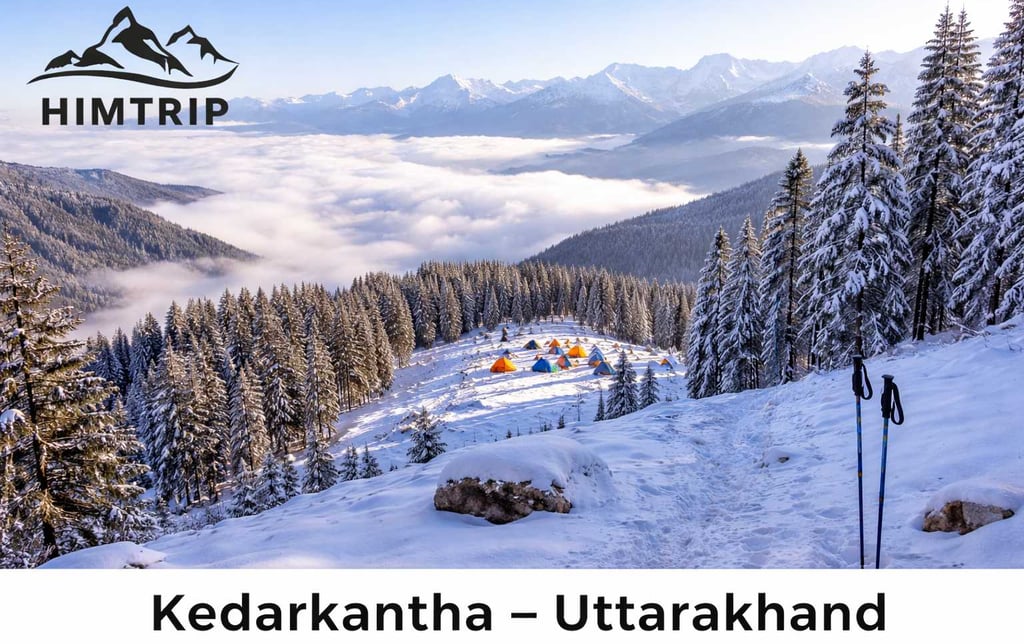
Kedarkantha is India’s most popular winter summit trek, known for reliable snow, a beautiful forest approach, and a scenic sunrise from the peak,
UTTARAKHAND TREKS
2 min read
✅ KEDARKANTHA SUMMIT TREK – UTTARAKHAND
Region: Sankri Range, Uttarkashi
Difficulty: Moderate
Duration: 4 Days / 3 Nights
Max Altitude: ~3,800m
Price From: ₹5,500
⭐ Short Overview
Kedarkantha is India’s most popular winter summit trek, known for reliable snow, a beautiful forest approach, and a dramatic sunrise from the peak. Suitable for beginners with decent fitness, it offers high reward for moderate effort.
1. Difficulty Breakdown
Overall Difficulty: Moderate (winter conditions raise difficulty slightly)
Trail Type
Pine & oak forest trails
Snow-clad slopes (Dec–Apr)
Ridge walk + steep summit climb
Daily Distance
3–6 km per day
Altitude Gain
Sankri (~1,900m) → Summit (~3,800m)
Fitness Required
Ability to walk 6–7 km daily
Good balance on snow
Early morning summit push tolerance
Who Should Avoid
People with breathing issues in cold climates
Those unable to trek in snow or early morning low temperatures
2. Itinerary (Day-wise)
Day 1: Dehradun → Sankri (Drive)
7–8 hour scenic drive via Mussoorie & Mori.
Evening briefing, acclimatization walk.
Overnight in homestay/guesthouse.
Day 2: Sankri → Juda Ka Talab (Trek)
Gradual ascent through dense pine forests.
Juda Ka Talab — semi-frozen/frozen lake in winter.
Campsite surrounded by snow-laden forests.
Trek Duration: 4–5 hours.
Day 3: Juda Ka Talab → Kedarkantha Base Camp
Gentle ascent to a wide-open camp area with big mountain views.
Sunset point nearby.
Rest early for summit push.
Trek Duration: 3 hours.
Day 4: Summit Day → Sankri → Dehradun
Start at 2–3 AM for sunrise summit.
Steep snow climb near final 200–300m.
360° views: Swargarohini, Black Peak, Bandarpoonch.
Descend to Sankri; return to Dehradun by late evening (optional stay recommended).
3. Inclusions & Exclusions
Inclusions
Tented accommodation (twin/triple sharing)
Sleeping bags + mats
All meals on trek
Certified trek leader + support staff
Microspikes & gaiters (if required)
Permits & forest fees
Exclusions
Transport to/from Sankri
Personal gear: shoes, jackets, poles
Porter/mule charges
Personal expenses
Anything not listed
4. How to Reach
Nearest Hub: Dehradun
Route:
Dehradun → Mussoorie → Purola → Sankri (base village)
Transport Options
Shared cabs from Dehradun
Private taxi
Local buses to Sankri (less reliable)
5. Stay & Food
Stay
Day 1: Homestay/guesthouse at Sankri
Day 2–3: Tented campsite
Washrooms: dry toilets at campsites
Food
Hot veg meals
Soup in evening
Tea throughout the day
Simple but nutritious food ideal for cold weather
6. Safety & Weather
Safety
Summit push done early morning for stable snow
Use of microspikes & gaiters in winter
Guides monitor AMS symptoms
No network beyond Sankri
Weather
Dec–Apr: Snow, sub-zero nights
May–Jun: Warmer, spring conditions
Oct–Nov: Clear skies, minimal snow
7. Best Time to Visit
December–April → Best for snow
October–November → Clear skies, ideal for first-timers
Avoid: Monsoon months
8. Packing List
Mandatory
Trekking shoes
3 warm layers + padded jacket
Gloves (waterproof)
Thermals
Headlamp
2 water bottles
Sunglasses (for snow glare)
Optional
Trekking pole
Power bank
Gaiters (if not provided)
9. FAQs
Q. Is Kedarkantha good for beginners?
Yes—moderate difficulty, but snow requires basic fitness.
Q. How cold does it get?
-5°C to -10°C at night in winter.
Q. Do I need microspikes?
Yes, for the summit day (usually provided by operator).
Q. Are washrooms available?
Dry toilets at campsite; no running water.
Q. Is camping allowed at Juda Ka Talab?
Camping is done in designated zones near the lake.
Ready to conquer your first Himalayan summit?
Connect on Social
Reach out for your Himalayan adventure trip queries. Lets make it happen!
Have a Query!
© 2025. All rights reserved.